September 2026 Money Update: Housing Misses, Rates on Hold and a Bigger Age Pension
The Age Pension increase lands 20 September 2026, deeming rates rise with it, the RBA holds at 4.35%, and Phil and Dan stress-test retiring at 60 with $500K.
Category: Uncategorized
Expert insights, practical strategies, and market updates to help you make informed financial decisions for your future.


The Age Pension increase lands 20 September 2026, deeming rates rise with it, the RBA holds at 4.35%, and Phil and Dan stress-test retiring at 60 with $500K.


Heaps of pensioners turn down work because they assume it will cost them their Age Pension. The Work Bonus ignores the first $300 a fortnight of employment income, and unused amounts bank up to $11,800. Three worked examples show how little the pension actually moves.


Since the 2026 Budget hit family trusts and the CGT discount, investment bonds are being sold as the answer. Phil modelled $100K over 11 years for a top-bracket taxpayer and the bond won by less than $3,000. Lift inflation to 3% and it actually loses.


Dental clinics have started marketing super as a payment plan, and applications have more than doubled in two years. Compassionate release exists for genuine hardship, but the bar is high, the ATO rejects 30% of applications, and Phil’s maths shows a $40,000 withdrawal can cost $390,000 by retirement.


The average super balance in Australia is now $182,781, but the median is just $63,339. See the latest ATO figures for every age group, how your balance compares and what the numbers actually mean for your retirement.


You can retire whenever you want. That is the short answer, and it surprises people every week. A lot of Australians treat 67 as “retirement age”, but 67 is only the Age Pension age. Your actual retirement date is your call, and for most people the real question is how to fund the gap between stopping work and the Age Pension starting.
That gap, typically from around 60 to 67, is the most dangerous stretch in most retirement plans. We recorded a podcast episode on exactly this, because the strategies that soften it are legal, well established and almost nobody has heard of them.


The average super balance in Australia is now $182,781, but the median is just $63,339. See the latest ATO figures for every age group, how your balance compares and what the numbers actually mean for your retirement.


You can retire whenever you want. That is the short answer, and it surprises people every week. A lot of Australians treat 67 as “retirement age”, but 67 is only the Age Pension age. Your actual retirement date is your call, and for most people the real question is how to fund the gap between stopping work and the Age Pension starting.
That gap, typically from around 60 to 67, is the most dangerous stretch in most retirement plans. We recorded a podcast episode on exactly this, because the strategies that soften it are legal, well established and almost nobody has heard of them.


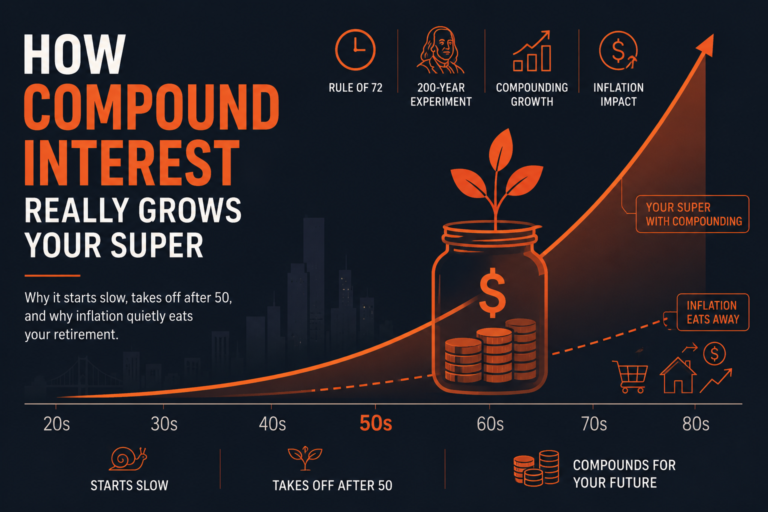
Why your super doubles fastest late in life, the rule of 72, and how inflation quietly compounds against you. Real examples from Australian advisers.


67 is the Age Pension age, not the retirement age. From 60, JobSeeker’s requirements can be met entirely through volunteering, super in accumulation is invisible to Centrelink, and one couple gained four years of part Age Pension just by splitting contributions. The gap years from 60 to 67 reward structure. Here’s how.


Australians lost $2.18 billion to scams in 2025, according to the National Anti-Scam Centre’s latest Targeting Scams report, and investment scams alone accounted for $837.7 million of it. Those are the reported numbers. The real figure is higher, because plenty of people feel too embarrassed to report it and never tell anyone.
We recorded a full episode of the Wealthlab podcast on this, partly because scams keep getting more sophisticated and partly because it has happened to us. Someone cloned our Instagram account, copied every photo we had ever posted, called it a community page and started inviting our own followers to join. Scott’s wife spotted it before we did. If it can happen to two advisers in Melbourne, it can happen to anyone.


On 23 June 2026, the federal government agreed to ban self-managed super funds from using new limited recourse borrowing arrangements (LRBAs) to buy residential property. The Bill passed both houses of Parliament in under 48 hours, received Royal Assent on 26 June 2026, and the ban commences on 10 August 2026.
If your SMSF already holds residential property under an LRBA, nothing changes. If you were planning to set one up, the window has effectively closed. And if you were relying on this strategy as a core part of your retirement plan, it is worth understanding what happened, what the numbers actually show, and what still works.



Heaps of pensioners turn down work because they assume it will cost them their Age Pension. The Work Bonus ignores the first $300 a fortnight of employment income, and unused amounts bank up to $11,800. Three worked examples show how little the pension actually moves.


Since the 2026 Budget hit family trusts and the CGT discount, investment bonds are being sold as the answer. Phil modelled $100K over 11 years for a top-bracket taxpayer and the bond won by less than $3,000. Lift inflation to 3% and it actually loses.


The average super balance in Australia is now $182,781, but the median is just $63,339. See the latest ATO figures for every age group, how your balance compares and what the numbers actually mean for your retirement.


You can retire whenever you want. That is the short answer, and it surprises people every week. A lot of Australians treat 67 as “retirement age”, but 67 is only the Age Pension age. Your actual retirement date is your call, and for most people the real question is how to fund the gap between stopping work and the Age Pension starting.
That gap, typically from around 60 to 67, is the most dangerous stretch in most retirement plans. We recorded a podcast episode on exactly this, because the strategies that soften it are legal, well established and almost nobody has heard of them.


Why your super doubles fastest late in life, the rule of 72, and how inflation quietly compounds against you. Real examples from Australian advisers.


67 is the Age Pension age, not the retirement age. From 60, JobSeeker’s requirements can be met entirely through volunteering, super in accumulation is invisible to Centrelink, and one couple gained four years of part Age Pension just by splitting contributions. The gap years from 60 to 67 reward structure. Here’s how.


The Age Pension increase lands 20 September 2026, deeming rates rise with it, the RBA holds at 4.35%, and Phil and Dan stress-test retiring at 60 with $500K.


Dental clinics have started marketing super as a payment plan, and applications have more than doubled in two years. Compassionate release exists for genuine hardship, but the bar is high, the ATO rejects 30% of applications, and Phil’s maths shows a $40,000 withdrawal can cost $390,000 by retirement.


New SMSF loans for residential property are banned from 10 August 2026, the price of a Labor-Greens deal on the budget tax package. Existing arrangements are grandfathered, commercial property borrowing is untouched, and Scott and Phil’s read of the ATO data shows the market impact is close to nil.


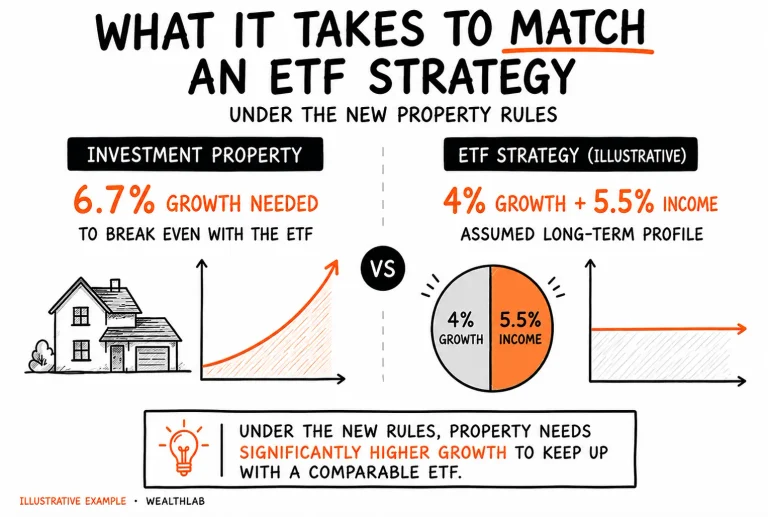
The budget’s property tax changes are now law, and they’re calmer than the memes suggest. Properties owned before 12 May 2026 are grandfathered, the 30% CGT rate is a minimum not a flat tax, and Phil’s maths shows what property now needs to earn its place.


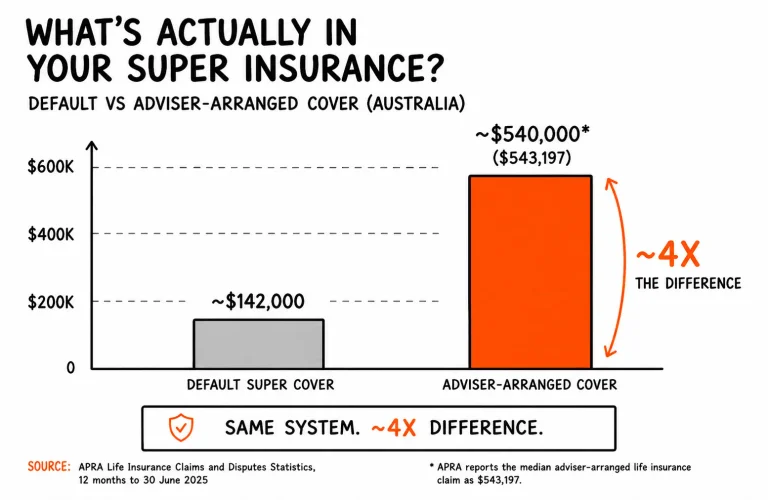
The average life insurance claim paid through super funds is about $142,000. Adviser-arranged cover pays roughly four times that. Neither number means your cover is wrong, but most members have never looked. What’s inside your super, what it costs, and why it shrinks as you age.


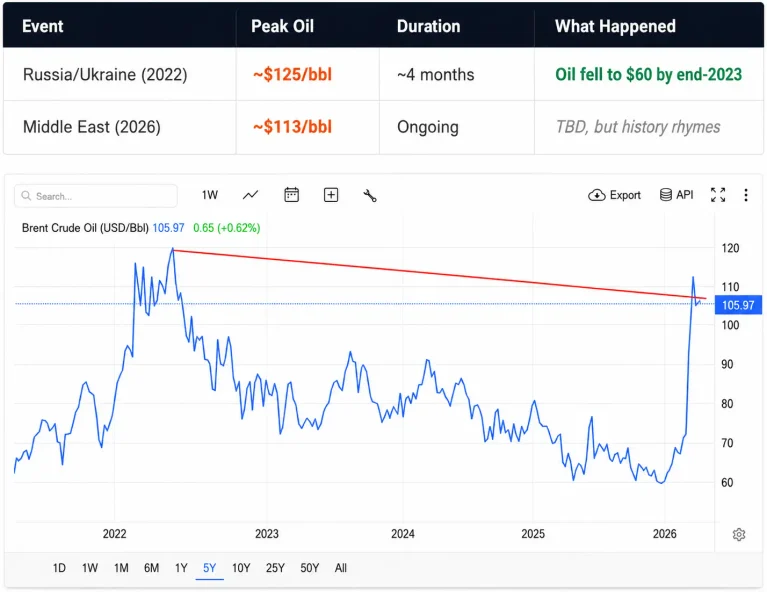
Brent crude went from $113 to $76 and back to $95 in six months. Anyone repositioning at each turn was wrong twice. What the maths says about switching super to cash, sequencing risk near retirement, and the $500K couple who ran the numbers both ways.
Book a 15-minute chat to see if we’re a match for your retirement goals.
60 seconds
6 quick questions about your retirement situation. Get an instant educational snapshot showing common strengths and gaps for Australians in a similar position.