
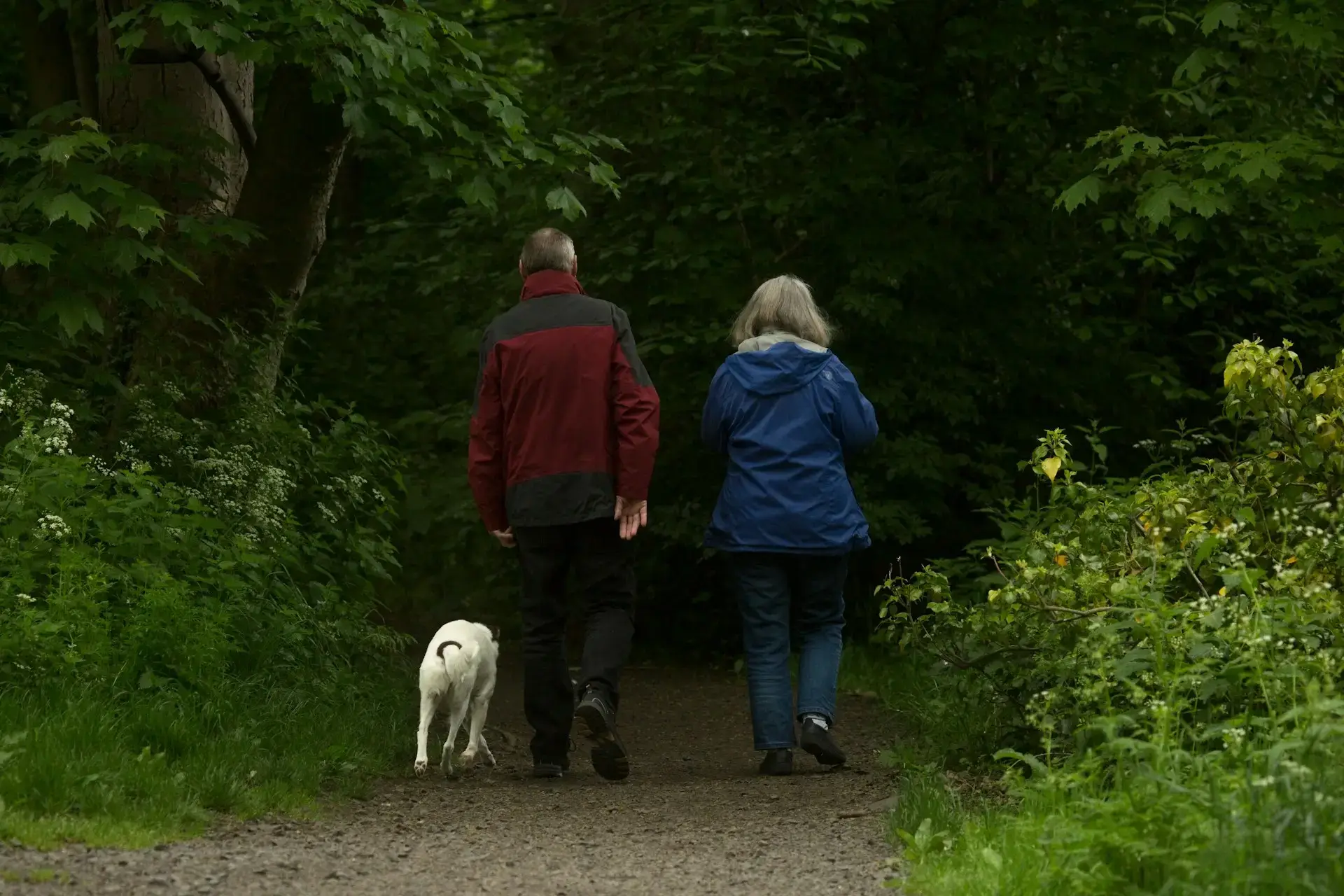
Why non-financial planning matters as much as the money
The financial side of retirement gets the most attention. Super balances, drawdown rates, Age Pension eligibility, tax structuring, contribution strategy. All of it matters. But the retirees who describe their retirement as genuinely satisfying, five and ten years in, are consistently the ones who planned the non-financial side as deliberately as the financial side.
The Australian Institute of Health and Welfare estimates that 10 to 15% of older Australians experience depression, with the rate rising materially for those who live alone or have limited social contact. Male retirees within the first two years of leaving work sit in a specific higher-risk group. This is not a marginal issue. It sits alongside financial preparedness as one of the two most consequential drivers of retirement quality.
Scott framed the point directly on Episode 8 of the Wealthlab Podcast, The Psychology of Money: “The goal isn’t to die with the largest super balance possible. The goal is to convert capital into confident living.” The financial plan is the enabler. The non-financial plan is the reason the financial plan exists.
1. Housing: where and how you’ll live
Housing is the single biggest lifestyle decision most retirees make, and it has direct financial consequences. Three main paths, each with tradeoffs.
Staying in the current home
For homeowners who own their home outright and have strong emotional attachment to their community, staying in place often makes practical and financial sense. The family home is exempt from the Age Pension assets test, so keeping the property preserves that exemption regardless of the property’s market value.
The tradeoffs to think through:
- Ongoing costs. Rates, insurance, utilities, maintenance and repairs typically add up to $8,000 to $12,000 a year for a family home, before any major work is needed. Costs generally rise faster than headline CPI.
- Physical suitability over time. Stairs, narrow doorways, high-maintenance gardens, and distance from healthcare facilities can become genuine issues in your late 70s and 80s.
- Emotional value. Community, neighbours, familiar surroundings, and proximity to family are not easily replaced by moving.
Downsizing to a smaller home
Downsizing is one of the most common retirement transitions. Selling a family home and moving to a smaller property, apartment, townhouse, or regional area can reduce ongoing costs, simplify daily life, and free up capital.
The financial mechanics matter here. Selling the family home converts an exempt asset into an assessable one under the Age Pension means test, which can reduce pension entitlement for some households. The downsizer contribution rules let anyone aged 55 or older contribute up to $300,000 per person ($600,000 per couple) from a home sale into super, outside the normal contribution caps.
Scott and Phil walked through the downsizer contribution traps in Episode 2 of the podcast, including the 90-day deadline and how the Age Pension impact often surprises people who assumed downsizing would automatically improve their financial position. It is worth understanding this properly before signing a contract, because reversing the sale is not an option.
The non-financial checks worth running before downsizing:
The tradeoff between smaller ongoing costs and the emotional cost of leaving
- Proximity to healthcare, hospitals, and your GP
- Access to public transport, particularly if you may stop driving later
- Single-level living, wide doorways, accessible bathrooms
- Social environment: proximity to friends, family, and community

Retirement villages and community living
Retirement villages offer maintenance-free living, on-site social facilities, and often integrated healthcare and security. For some retirees, the community element is genuinely valuable.
The important caveat: retirement village contracts are complex. Entry costs, ongoing fees, exit fees (often called deferred management fees), and rules around selling or leaving vary significantly between operators. The Fair Trading department in each state publishes a retirement village guide worth reading before signing anything. Independent legal and financial review before signing is generally worthwhile because the contracts are long-term and can be difficult to exit.
2. Purpose and daily structure
The single most-underestimated non-financial challenge in retirement is the sudden loss of daily structure. After 40 years of a work schedule, the removal of that structure creates a vacuum that some people find liberating and others find genuinely disorienting.
Data from the Australian Bureau of Statistics shows Australians aged 65 and over spend an average of 6.5 hours per day on leisure activities, more than any other age group. But “leisure” covers everything from meaningful hobbies to passive television watching. The pattern we generally see in practice is that retirees who fill their time with activities that feel purposeful report much higher life satisfaction than those who fill the same hours with passive time.
Common patterns that work well:
- Volunteering. Meals on Wheels, Rotary, mentoring programs, hospital and hospice volunteering, community garden programs, and skill-sharing organisations. Volunteering Australia is the national coordinating body.
- Part-time or consulting work. Even a day or two a week gives structure, income, and continued social contact.
- Learning. U3A (University of the Third Age) runs courses across Australia for older adults. Community colleges, online courses, and universities all offer alternatives.
- Grandchildren and family. Meaningful, but the pattern we see is that this works best when there are clear boundaries. Being the default full-time carer three days a week can quietly become a job.
- Creative and physical pursuits. Sports, music, art, gardening, writing. Anything that provides a sense of progress and skill development.
The retirees who struggle most in the first year are almost never the ones with lower super balances. They are the ones who did not think through what they would do with their time. This is worth planning before you retire, not after.
3. Social connection and combating isolation
Loneliness is one of the largest and most under-discussed health risks for older Australians. During working life, social interaction happens automatically through colleagues, clients, and daily commutes. In retirement, it requires deliberate effort.
The Australian Institute of Health and Welfare consistently links social isolation to poorer physical and mental health outcomes in older Australians, including higher rates of depression, faster cognitive decline, and shorter life expectancy. It is not a soft issue. It has measurable health consequences.
Practical patterns that generally help:
- Weekly rituals. A regular coffee catchup, walking group, or shared activity gives predictable structure to social connection.
- Club and community membership. Sports clubs (bowls, golf, tennis, walking), community centres, faith organisations, arts and craft groups, or Men’s Sheds.
- Continuing workplace friendships intentionally. Work relationships often fade after retirement if not deliberately maintained. A monthly lunch with former colleagues is a low-effort way to keep them alive.
- Technology as a bridge, not a replacement. Video calls, WhatsApp family groups, and Facebook communities can supplement in-person contact but generally do not substitute for it.
For anyone retiring to a new location, the social side deserves particular attention. Moving to a seachange or treechange town six hours from your existing network is a bigger social change than most people plan for.
4. Mental health and the emotional adjustment
Financial readiness does not automatically produce emotional readiness. Retirement is a major life transition, and it takes most people six to twelve months to adjust to the new rhythm.
The specific patterns worth being aware of:
- Loss of identity. For anyone whose career formed a central part of their self-image (professionals, business owners, tradespeople with a defined trade identity), the loss of the work role can feel disorienting for the first year or so.
- Loss of routine. The sudden shift from structured weekdays to unstructured time can feel like freedom at first, then anxiety, then boredom. This is a normal arc.
- Loss of purpose. Related but different. Not having a reason to get up in the morning is one of the strongest predictors of depressive symptoms in the first two years of retirement.
- Male retirees specifically. Beyond Blue and multiple Australian studies flag men in the first two years post-retirement as a higher-risk group for depression and social isolation, particularly men whose social networks were work-centred.
Recognising these patterns early, and treating them as a normal adjustment rather than a personal failing, is one of the most useful things any pre-retiree can do. Talking about them with friends, family, or a professional counsellor early tends to shorten the adjustment period considerably.
Beyond Blue offers a free, confidential helpline at 1300 22 4636. Lifeline is available 24/7 on 13 11 14. For persistent symptoms, a conversation with your GP is generally the right first step because a proper assessment is what matters, not a self-diagnosis.
The physical side of mental health
Physical activity is one of the single most effective supports for mental health in retirement. The Australian physical activity guidelines for adults 65 and over recommend at least 30 minutes of moderate-intensity activity on most days, combined with strength and balance training.
Regular walking, swimming, yoga, cycling, or gym sessions have measurable effects on mood, sleep, cognitive function, and physical strength. The evidence is well-established across multiple studies. For anyone approaching retirement without an established physical activity habit, building one in the six to twelve months before stopping work makes the post-retirement transition materially easier.
5. Relationships: partner, family, friends
Retirement changes more than your own schedule. It reshapes every relationship around you.
With your partner
If you and your partner retire around the same time, the sudden shift from separate daytime routines to shared daytime routines is one of the largest adjustments most couples make. The pattern we generally see is that couples who talk through their expectations before retiring adjust much more smoothly than couples who assume they are on the same page.
Questions worth talking through explicitly:
- How much time do we want to spend together vs independently?
- How will household responsibilities shift now that both of us are home?
- What are our travel and lifestyle priorities?
- How will we handle differences in how we want to spend money?
The Age Pension is assessed on combined household assets and income, so financial decisions made by one partner directly affect the other’s entitlement. Coordinating the financial plan as a couple is generally more effective than each partner doing separate planning.
With your family
Retirement often brings expanded family roles: caring for grandchildren, supporting ageing parents, closer relationships with adult children. These roles can be genuinely rewarding, but the pattern we see is that boundaries matter. Saying yes to every request quickly leads to burnout, even in retirement.
With your friends
Work provides built-in social contact. After retirement, maintaining friendships requires more deliberate effort. Regular catch-ups, shared activities, and joining new groups all help. Investment in friendships is directly correlated with better health outcomes in the AIHW data, which makes this less of a nice-to-have than most people treat it.
6. Physical health and preventive care
Your health is the foundation everything else in retirement rests on. Financial comfort matters much less if you are physically unable to enjoy it.
The preventive care habits that matter most from age 60 onward:
- Regular GP check-ups (annually at minimum)
- Skin checks (annually or more often for higher-risk skin types)
- Dental checks (six-monthly)
- Eye tests (every two years, more often if vision is changing)
- Bowel cancer screening (the National Bowel Cancer Screening Program sends a free kit every two years from age 50 to 74)
- Breast screening (BreastScreen Australia recommends every two years from 50 to 74)
- Prostate discussions with your GP from around 50 to 55 onwards
- Blood pressure, cholesterol, and diabetes screening as recommended by your GP
Many conditions, including heart disease, diabetes, and several cancers, are significantly more treatable when detected early. The Medicare rebate covers a significant portion of these screenings.
7. Healthcare and aged care planning
Healthcare costs are one of the most underestimated retirement expenses. We covered the detailed cost breakdown in our post on the biggest expenses in retirement, but the non-financial angle is worth flagging here.
Private health insurance premiums typically rise faster than general inflation and continue to rise into your 70s and 80s. Out-of-pocket costs beyond Medicare rebates (specialists, dental, optical, hearing aids, allied health) add materially to the annual budget as needs increase with age.
Aged care sits later in the retirement arc but often becomes the single largest expense any Australian faces. The My Aged Care website (Services Australia) is the authoritative starting point for understanding the Australian aged care system, including home care packages, residential aged care, and the fees involved. Aged care planning typically warrants specialist advice because the interaction between aged care fees, the Age Pension assets test, and the family home is structurally complex.
For most Australians, planning the broader retirement finances around the likelihood of some level of aged care support in the later years is part of the retirement conversation. Scott and Phil covered how estate planning intersects with aged care and family decisions in Episode 12 of the podcast, Super vs Inheritance.
Non-financial retirement planning checklist
| Area | Key questions to work through | Why it matters | Where to get help |
|---|---|---|---|
| Housing | Stay, downsize, or relocate? Is your home suitable for your late 70s and 80s? | Affects daily costs, independence, Age Pension eligibility, and social connection | Financial adviser for pension implications, real estate agent, retirement village lawyer |
| Daily purpose | What will you do each day? Do you have hobbies, volunteering, or part-time work planned before you retire? | Lack of purpose is one of the strongest predictors of first-year retirement dissatisfaction | Volunteering Australia, U3A, local council programs, community centres |
| Social connection | How will you maintain and build friendships? Which groups will you join? | Social isolation is linked to depression, cognitive decline, and shorter life expectancy | Community centres, sporting clubs, Men’s Sheds, faith organisations |
| Mental health | Are you emotionally prepared for the transition? Do you have support if you struggle? | 10 to 15% of older Australians experience depression, higher among the isolated | Beyond Blue (1300 22 4636), Lifeline (13 11 14), your GP |
| Relationships | Have you talked through retirement expectations with your partner? | Unaligned expectations are a common source of couple conflict in early retirement | Relationships Australia, couples counselling, financial adviser for joint planning |
| Physical health | Do you have a regular exercise habit? Are check-ups scheduled? | Health is the foundation of everything else in retirement | GP, Medicare, private health fund, physiotherapist |
| Healthcare planning | Have you budgeted for private health, dental, optical, and specialist costs? | Out-of-pocket health costs rise significantly with age | Medicare, private health comparison sites, financial adviser |
| Aged care | Have you thought through potential future care needs? | Aged care can be the single largest expense in retirement | My Aged Care, financial adviser, aged care placement services |
How non-financial and financial planning connect
Every non-financial decision in retirement has a financial consequence, and every financial decision opens or closes non-financial options. A good retirement plan integrates both sides deliberately.
Some common examples:
- Downsizing decisions affect Age Pension entitlement through the assets test, and interact with the downsizer contribution rules
- Travel spending is fun to plan for, but requires higher super drawdowns during the go-go years
- Private health insurance costs $4,000 to $8,000+ per year for a couple over 65, and continues to rise
- Volunteering is free but may replace paid income in the years before full retirement
- Caring for grandchildren saves your family childcare costs but can reduce your own income-earning capacity if you were still working part-time
The retirement question is rarely just “how much money do I have?” It is “what life do I want to live, and how do I structure my finances to support it?” The best plans work backward from the second question to the first.
Where next in our retirement guides
- How Retirement Works in Australia covers the three-pillar retirement income system
- The Biggest Expenses in Retirement covers the detailed cost side
- How Do Couples Adjust After Retirement? covers the relationship dynamics in more depth
- Estate Planner or Financial Adviser for Retirement covers the professional advice side
Frequently asked questions
What are the biggest non-financial issues in retirement?
Housing (where and how you’ll live), daily purpose and routine, social connection, mental health and emotional adjustment, relationships with your partner and family, and physical health. Research from the Australian Institute of Health and Welfare puts social isolation and mental health among the biggest wellbeing risks for older Australians, alongside housing security.
How long does it take to adjust to retirement?
Most people take six to twelve months to adjust to the new rhythm. The first few months often feel like an extended holiday, followed by a period of adjustment as the loss of structure, identity, and daily social contact becomes real. Recognising this arc as normal, rather than a personal failing, is one of the most useful things pre-retirees can do.
How can I prepare emotionally for retirement?
Think through how you’ll spend your time before you retire, not after. Identify which social connections you want to maintain or build. Talk to your partner about expectations. Build a regular exercise habit in the six to twelve months before stopping work. Acknowledge that some adjustment friction is normal for most people. If you notice persistent low mood or social withdrawal, a conversation with your GP or Beyond Blue (1300 22 4636) is generally the right first step.
Why are male retirees at higher risk of depression?
Beyond Blue and multiple Australian studies flag men in the first two years post-retirement as a higher-risk group for depression and social isolation, particularly men whose social networks were work-centred. The loss of daily colleague contact, professional identity, and workplace routine hits harder for those without established outside-work relationships and interests. Building deliberate social routines before retirement helps reduce the risk.
How does housing affect Age Pension eligibility?
The family home is exempt from the Age Pension assets test, regardless of its market value. Selling the home and holding the proceeds as cash or investments converts an exempt asset into an assessable one, which can reduce Age Pension entitlement. This is one of the reasons downsizing decisions warrant careful financial modelling before signing a contract.
Should I move to a retirement village?
For some retirees, retirement villages offer valuable community, low-maintenance living, and integrated services. The complication is that retirement village contracts are legally complex, with entry costs, ongoing fees, and exit fees (often called deferred management fees) that vary significantly between operators. Independent legal review before signing is generally worthwhile because the contracts are long-term.
How much does aged care cost in Australia?
Aged care costs vary widely by health needs, care level, location, and individual financial circumstances. Home care packages have four levels with different funding amounts. Residential aged care fees include a basic daily fee (set at 85% of the maximum Age Pension), a means-tested care fee, and an accommodation payment (RAD or DAP) that varies by facility. The My Aged Care website (Services Australia) is the authoritative source for current fees and eligibility.
How do couples adjust to being at home together after retirement?
The pattern we generally see is that couples who talk through expectations before retiring adjust much more smoothly than couples who assume they are on the same page. Questions worth talking through explicitly include how much time you want together vs independently, how household responsibilities will shift, and how you’ll handle differences in spending priorities. Relationships Australia offers couples counselling for those who find the adjustment harder than expected.
What role does purpose play in retirement satisfaction?
Purpose is one of the strongest predictors of retirement satisfaction in the research and in practice. Having a reason to get up in the morning, whether it’s volunteering, learning, creative pursuits, part-time work, or caring for family, correlates strongly with better mental health, better physical health, and higher life satisfaction. Planning for purpose before you retire is generally more effective than trying to find it afterwards.
How can I stay socially connected in retirement?
Weekly rituals (regular coffee catchups, walking groups, shared classes) provide predictable structure. Community groups, sporting clubs, faith organisations, and interest-based groups add breadth. Deliberately maintaining friendships from work life through regular contact helps stop them fading. For anyone retiring to a new location, the social side deserves particular attention because the loss of an existing network is a bigger adjustment than most people plan for.
Your next step
Retirement is one of the largest life transitions most Australians go through, and the non-financial side of the plan matters as much as the money side. The two are deeply connected: every lifestyle choice has a financial consequence, and every financial decision opens or closes lifestyle options.
If you want to talk through what your own retirement is likely to look like across both sides of the ledger, book a free chat with the Wealthlab team. No pressure, no jargon.
Not ready for a call? The free Wealthlab retirement quiz takes about 60 seconds and gives you a snapshot of where you stand.