
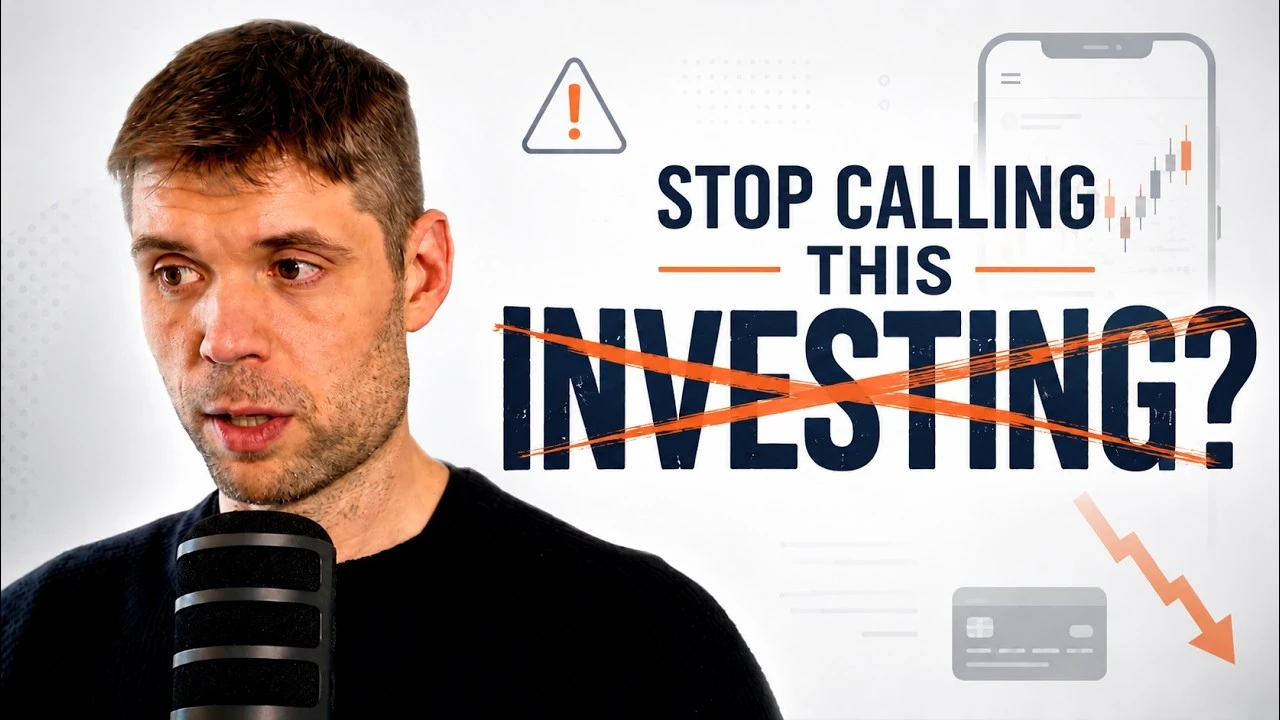
On 12 June 2026, the Federal Court handed down the largest penalty in ASIC’s history: $300.2 million against collapsed Contract for Difference (CFD) provider Union Standard International Group and its two former authorised representatives, EuropeFX and TradeFred. The court found they had engaged in “systemic unconscionable conduct” between 2018 and 2020, deliberately targeting “inexperienced and vulnerable” Australians and pressuring them to trade leveraged products that, in 95 to 99 per cent of cases, made the operator money by losing the customer money.
If you have ever clicked one of those slick “become a savvy trader” ads on YouTube or Facebook, this case is worth understanding. So is the broader picture: in the 2024 financial year alone, 68 per cent of retail CFD traders in Australia lost money, totalling more than $458 million in losses and $73 million in fees.
This is general information about CFD trading in Australia, why it goes wrong so consistently, and what to do if you have a family member, partner or adult child who has been sucked in.
What is a CFD
A Contract for Difference is a leveraged bet on whether the price of something will go up or down. You don’t own the underlying asset. You just hold a contract that pays you if the price moves in your favour and costs you if it moves against you.
The hook is the leverage. With as little as $5,000, a retail trader can control a $100,000 position. A 1 per cent move in your favour doubles your money. A 1 per cent move against you wipes you out.
That asymmetry is sold as opportunity. In reality, it is a structural reason why most retail traders lose, and lose quickly. ASIC’s own data shows the average retail CFD account in Australia loses money in any given year. The Union Standard case showed that in some operators’ books, customers lost in up to 99 per cent of cases, and the operators booked those losses as revenue.
Please note: All figures, scenarios and examples in this article are general information only. They are not personal advice and don’t take into account your individual circumstances.
What the Federal Court actually found
Justice Wigney’s findings in ASIC v Union Standard International Group (No 5) [2026] FCA 719 are worth reading in full if you want a clear picture of how these operations work. The court found:
- EuropeFX and TradeFred derived the bulk of their revenue from customer trading losses. Their business model depended on customers losing.
- Account managers were given financial incentives to pressure customers to deposit more money into their trading accounts.
- The companies made misleading or deceptive representations about the profits customers could expect to generate.
- They failed to provide vulnerable customers with adequate explanations of the products or the risks.
- Customers were pressured to trade larger and larger sums, then discouraged from making complaints when they lost money.
Justice Wigney described the conduct as “unquestionably egregious, deliberate and flagrant,” adding that he found it “difficult in this case to envisage a more serious case of contravening conduct.”
The combined penalty: $156.7 million against Union Standard, $114.1 million against EuropeFX, and $29.4 million against TradeFred. Customers lost more than $83 million combined. Most of that money is not coming back, because both EuropeFX and Union Standard collapsed into liquidation in 2020.
Why “I’ll just have a go” rarely ends well
The pattern advisers see is consistent. We don’t see it in clients who come to us first. We see it in the partners, adult children and friends of clients who have already lost money and are now trying to work out how to recover.
A few of the common entry points:
The “education” trap. Free webinars, slick online courses, and YouTube influencers promising to teach you “how to read the charts.” A surprisingly common variant is a wealth education seminar with an affiliate link to a specific CFD platform tucked into the marketing. Free education is rarely free. Somebody is getting paid, and if it is not you, it is you who is the product.
The demo account trap. Most platforms offer a practice account with fake money. People win on the demo, feel confident, and switch to real money with a different emotional response, then lose. The demo doesn’t replicate the psychological pressure of real losses.
The credit card trap. ASIC’s case found customers were being pushed to fund their trading accounts using credit cards when they had run out of cash. This is the clearest possible signal that a product is predatory. No legitimate investment platform encourages clients to borrow on a credit card to deposit funds.
The “you’ve qualified as a sophisticated investor” trap. Australia’s wholesale and sophisticated investor classifications are largely based on income or asset thresholds, not knowledge. Being told you “qualify” sounds flattering. What you are actually qualifying for is the removal of consumer protections, including access to the financial ombudsman, that exist precisely to stop products like this hurting you. If someone is pushing you to upgrade to a pro or wholesale account, run.
The relationship damage is the part nobody talks about
In 13 years of advising, the financial loss is rarely the worst part of these stories.
What we see, almost always, is the loss of trust in a marriage or family. Someone (usually a bloke, in our experience) decides to “make a bit of money on the side” using inheritance funds, a redundancy payout, or savings their partner didn’t know about. It goes wrong. The money is gone. The conversation that follows is not really about the money. It is about whether the partner can be trusted with anything financial again.
This sits squarely in the territory Scott covered in our podcast episode on the Psychology of Money: “Your biggest financial risk right now is not the stock market. It’s not interest rates. It’s your psychology.” Greed, scarcity, the need to feel like you are “doing something” with your money: these are the levers CFD marketers pull, deliberately, on people who are often perfectly capable in every other area of their lives.
How this affects you if you are near or in retirement
You might be reading this and thinking it doesn’t apply to you. You don’t trade CFDs. You are not interested in derivatives. Fair enough. But three things worth thinking about:
1. Lump sums make you a target. Retirement is a lump-sum event. Super payouts, downsizer proceeds, inheritance, redundancy payments. People sitting on $200,000 to $800,000 in fresh cash are exactly who CFD operators, forex platforms and “AI trading bots” want to talk to. The marketing gets noticeably more intense once you are over 55. If a “wealth coach” is suddenly very keen to talk to you, ask why.
2. Your adult kids are in the firing line. People aged 18 to 35 are the most heavily targeted demographic for these products. They have less life experience with losses, more exposure to online ads, and often a vague but powerful feeling that they are “behind” financially. If you have adult children or grandchildren, a conversation about how these products actually work is one of the more useful things you can do for them.
3. Storm Financial was 17 years ago and still echoes. Older Australians remember Storm Financial. Many were affected directly. The product was different, but the underlying mechanic was the same: leverage applied to retail investors who didn’t fully understand what they were exposed to, sold by people who profited regardless of the outcome. Every decade, the wrapper changes. The mechanic doesn’t.
Leverage isn’t the problem. The kind of leverage matters
This is worth being clear about: leverage itself is not a bad word. Most Australians use it.
A home loan is leverage. You control an $800,000 house with a deposit and a mortgage. A debt-recycling strategy uses leverage to build a share portfolio inside a tax-effective structure. An investment property uses leverage to control a productive asset over a 10 to 30 year horizon. A reverse mortgage uses leverage in retirement to release equity without selling the family home.
What separates productive leverage from destructive leverage comes down to four things:
- You own a real, identifiable asset. A house. A share. A unit in a fund. Not a contract.
- The debt is secured against the asset, and the rules are stable.
- The time horizon is decades, not minutes. Compounding is the friend of long-term investors. It is the enemy of short-term traders, because trading costs and slippage compound too.
- The asset produces income or genuine capital growth. Rent. Dividends. Earnings. Not just price movements someone else is betting against you.
CFDs fail all four tests. That doesn’t make them illegal. It does make them a product that, on the regulator’s own data, loses retail investors hundreds of millions of dollars every year.
What we generally tell clients about getting rich quickly
We sound like a broken record on this, but the principle hasn’t changed since the dawn of organised markets. Long-term investing in diversified, productive assets, held in the right structure for your circumstances, compounded over decades. That’s it. As Phil puts it: “Time does the heavy lifting. Don’t get cute.”
If somebody is telling you they can deliver 25 per cent returns when a diversified balanced index fund returns 6 to 7 per cent over the long run, your alarm should be ringing. If they are giving away “free” education to get you in the door, someone is getting paid, and it isn’t you. If the platform is regulated offshore and ASIC has no enforcement reach, the protections you rely on as an Australian investor don’t apply.
For more on how we work with new clients and the difference between proper advice and what often passes for it online, the podcast episode on spotting real vs fake advice is worth a listen.
FAQ
What is CFD trading in Australia? A Contract for Difference (CFD) is a leveraged derivative product. You don’t own the underlying asset. You hold a contract that pays you if the price moves one way and costs you if it moves the other. CFDs are legal in Australia and regulated by ASIC, but ASIC has applied a product intervention order since 2021 because of the high level of retail investor losses.
Are CFDs gambling or investing? ASIC’s own data suggests CFDs function more like gambling for most retail participants. In FY24, 68 per cent of retail CFD investors lost money, totalling more than $458 million. In some operator books, customers lost in up to 99 per cent of cases. The distinction between trading and investing is meaningful: investing involves owning productive assets over long time horizons; CFD trading is short-term speculation on price movement using borrowed money.
How much did Australians lose to Union Standard, EuropeFX and TradeFred? Customers of EuropeFX and TradeFred lost more than $83 million combined, according to ASIC. The Federal Court ordered $300.2 million in penalties in June 2026: $156.7 million against Union Standard, $114.1 million against EuropeFX, and $29.4 million against TradeFred. The penalty is paid to the Commonwealth; customer losses are a separate matter and most affected customers have not been compensated.
What does ASIC’s product intervention order on CFDs do? ASIC’s CFD product intervention order, in place since 2021, limits the maximum leverage available to retail clients, requires negative balance protection so retail customers cannot lose more than they deposit, restricts certain inducements, and requires standardised risk warnings. It is in place until at least May 2027.
Should I close my CFD account? Whether to hold or close any investment account depends on your individual situation, what you are using the product for, and what your alternatives are. Anyone uncomfortable with the risks involved in CFD trading, or unclear on what they are actually exposed to, should consider getting proper advice. The general observation across the industry is that CFDs are unsuited to the vast majority of retail investors, particularly those building long-term wealth or approaching retirement.
How do I check if a financial provider is legitimately licensed in Australia? Search the provider’s name on the ASIC Connect Professional Register at asic.gov.au. Confirm they hold an Australian Financial Services Licence (AFSL) and are authorised for the activities they are offering. Providers that operate from offshore without an AFSL are not bound by Australian consumer protections, and ASIC has limited ability to help if something goes wrong.
If a family member is in trouble
If you or someone in your family has lost money on a CFD, forex, or “AI trading” platform, two practical steps:
- Stop the bleeding. Do not deposit more money to “trade your way out.” This is the single most common trap. The losses compound, the platform makes more money in fees, and the position rarely recovers.
- Document everything. Account statements, marketing materials, communication with account managers. Even where the operator has collapsed, regulatory complaints can support broader enforcement and, occasionally, customer remediation programs.
If the broader question is “how do I build wealth properly without falling for this stuff,” that is the kind of conversation it is worth having with a licensed adviser. Book a free chat with the Wealthlab team if any of this has raised questions about your own situation, or have a look at our retirement quiz for a quick snapshot of where you stand.