
Most super funds automatically include some combination of life cover, total and permanent disability (TPD) cover and income protection, and most members have no idea what’s in there. A 2025 Super Consumers Australia survey found around one in four Australians didn’t know they held insurance through super at all.
That matters for two reasons. The premiums come straight out of your super balance every year, quietly compounding against your retirement savings. And the cover itself is the thing your family relies on if something goes wrong, so it’s worth knowing what it actually pays before the day it suddenly matters.
Petrol prices, rate calls and market wobbles all settle eventually. The quiet stuff inside your super doesn’t fix itself. It just sits there, doing what it’s been doing for years, until it matters a lot.
The three types of cover usually inside super
Life cover pays a lump sum to your beneficiaries if you die. TPD cover pays a lump sum if you become totally and permanently disabled and can’t work again. Income protection (sometimes called salary continuance inside super) pays a portion of your income for a period if illness or injury stops you working.
Default cover is provided automatically by most funds when you join, usually without medical underwriting, which is genuinely convenient. It’s also generic: sized for an average member, not for your mortgage, your dependants or your actual life.
The number that sat with us
On the podcast, Scott put the core question bluntly: “$142,000. Is that enough money?”
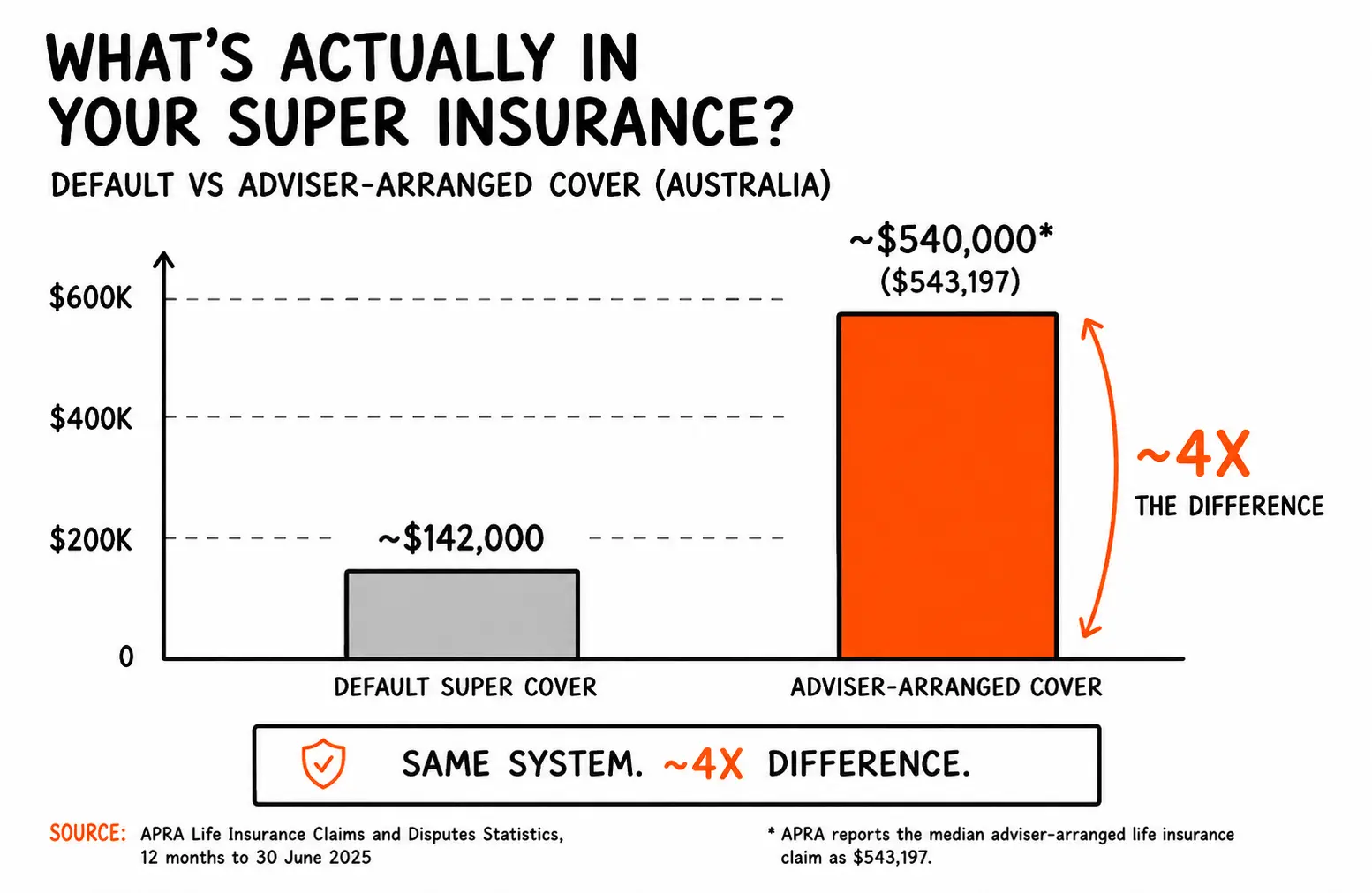
That’s roughly the average life insurance claim paid on super fund policies, based on APRA and ASIC life insurance claims statistics for the 12 months to 30 June 2025. The average claim on retail policies arranged through advisers was around $540,000 over the same period. Same system, roughly four times the difference, because advised cover tends to be deliberately sized to a person’s debts and dependants while default cover is a one-size setting.
To be fair to default cover, the same APRA data shows group super death claims had a 98% admittance rate, as high as any channel. The gap isn’t about funds refusing to pay. It’s about how much cover was in place to begin with.
That doesn’t automatically mean anyone’s default cover is wrong. Plenty of people are appropriately covered by their fund’s default settings, and there are situations where keeping default cover makes clear sense, which Scott and Phil cover in the episode. But it does mean it’s worth knowing what you’ve got, before you need it.
Why default cover often shrinks as you age
Most default cover is what’s called “unitised”, which is a polite industry term for “the older you get, the less it tends to pay.” A member might start with $400,000 of life cover in their 30s and be sitting on $40,000 by their 50s, often paying the same or more in premiums for the privilege.
Please note: All figures and examples in this article are approximate and for illustrative purposes only. Cover levels, premiums and policy terms vary significantly between funds and individuals. This is general information, not personal advice.
The fine print moves too. On the podcast, Phil walked through a real example of a TPD policy that quietly changed from paying a lump sum to paying in instalments, a meaningful difference at claim time that arrived as a product update most members would never have read. You can find the episode on the Wealthlab podcast page.
The five-minute homework
The homework here isn’t to change anything, cancel anything or call your fund. It’s simply to look. Log in to your super account, find the insurance section, and note four things: whether you have life, TPD or income protection cover, what the sums insured are, what the premiums cost each year, and when anyone last actually reviewed any of it.
We generally find that when people can’t answer two or more of those, they’re in the majority, not the minority. That’s pretty much why the episode exists. And knowing the answers is what turns “should I do something about this?” from a vague worry into a specific question you can put to the right professional.
Why this matters more once you’re 50+
Two things collide in your 50s and 60s. Unitised cover is often near its lowest point right when the stakes feel highest. And every dollar of premium is coming out of the balance you’re about to retire on, at exactly the stage when your super balance is doing its heaviest lifting.
Insurance needs also genuinely change near retirement. Once the mortgage is gone, the kids are off your hands and the super balance itself can support a surviving partner, some people find they’re paying for cover that no longer serves the purpose it did at 40. Others still have real gaps. Whether cover should be kept, adjusted or restructured is a personal insurance question for a licensed risk adviser and, where tax is involved, your accountant.
What we can say from the retirement planning side is this: the premium line on a super statement is part of the retirement maths, and it deserves the same ten minutes of attention as fees and investment options. If you want to see how your balance, contributions and costs project forward, the free Wealthlab super calculator is a good place to start.
FAQ
Do I have insurance in my super without knowing it? Quite possibly. Most large funds provide default life and TPD cover automatically, and around one in four Australians don’t know they hold insurance through super. Your fund’s online portal or annual statement lists any cover under an insurance section.
What is unitised cover in super? Unitised cover means your insurance is expressed as units whose dollar value changes with age rather than a fixed sum insured. In many default designs the payout amount falls as you get older, sometimes steeply, even while premiums stay the same or rise.
Why are default super insurance payouts smaller than advised policies? Mostly because of how the cover is sized, not how claims are handled. APRA and ASIC claims data for the year to 30 June 2025 put the average super fund life claim at about $142,000 versus around $540,000 for adviser-arranged retail policies, while group super claims were admitted at some of the highest rates of any channel.
Does insurance in super reduce my retirement savings? Yes. Premiums are deducted from your super balance, so they compound against your retirement savings over time. That doesn’t make the cover bad value, but it makes the premium worth knowing about and reviewing as circumstances change.
Should I cancel my default super insurance? That’s a personal insurance decision that depends on your debts, dependants, health and existing cover, and cancelling can be hard to reverse because new cover may require medical underwriting. It’s a question for a licensed insurance or risk adviser, not something to decide from general information.
Does Wealthlab provide insurance advice? No. Wealthlab provides retirement planning, superannuation and pension and Centrelink advice. We can help you understand how insurance premiums and cover sit inside your overall retirement picture, and we suggest a licensed risk adviser for personal insurance recommendations.
Where this fits in the bigger picture
If looking at your statement has raised broader questions about whether your super and retirement plan are on track, book a free chat with the Wealthlab team and we can talk through the retirement side of the picture. Or take the free Wealthlab retirement quiz for a general snapshot of where you stand.