
Best Age to Retire in Australia (2026 Guide)
The best age to retire in Australia depends on your

The best age to retire in Australia depends on your

Five funds dominate the 2026 awards, and the gaps between them are smaller than the gap between the right and wrong option inside any of them. The full rundown.

Most Australians use one retirement calculator, get a number, and either panic or relax without understanding what it actually means. The problem is that different calculators give wildly different results for the same person. We compared the best retirement calculators in Australia for 2026 so you know which one to trust and when to use more than one.

Australian household costs are rising faster than inflation, and retirees are being hit hardest. See the 2026 numbers on electricity, food, insurance and healthcare, and what rising costs mean for your super, Age Pension, and retirement plan.
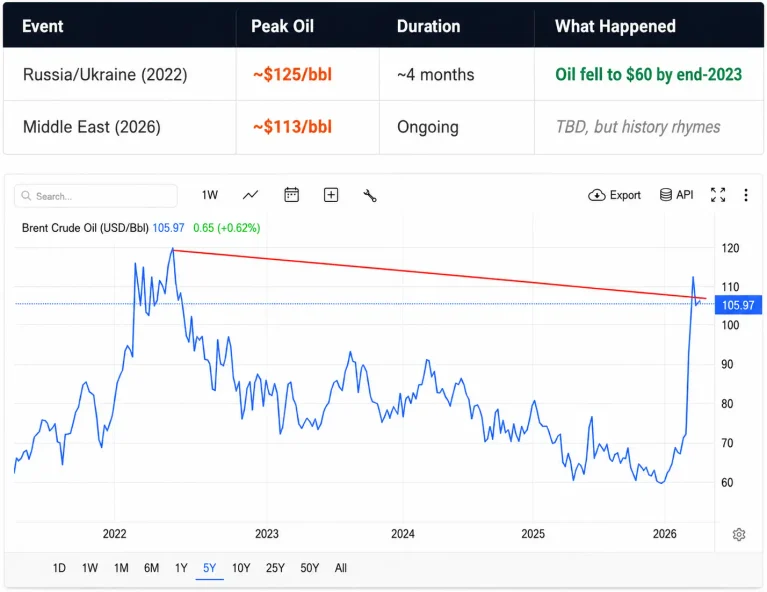
Brent crude went from $113 to $76 and back to $95 in six months. Anyone repositioning at each turn was wrong twice. What the maths says about switching super to cash, sequencing risk near retirement, and the $500K couple who ran the numbers both ways.
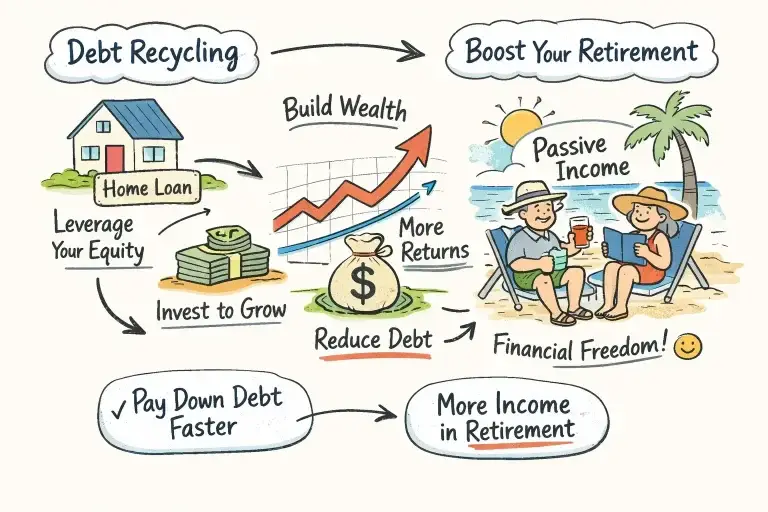
Debt recycling converts non-deductible home loan debt into potentially tax-deductible

Most Australians dream of a comfortable retirement but the reality is many stop working with far less than they expected. Discover why this happens, what the numbers really say, and how you can avoid becoming part of the statistic.

When it comes to your superannuation, bigger isn’t always better. In this episode of the Wealthlab Podcast, released on 29 May 2025, hosts Scott Jackson CFP® and Phil Sproule tackle one of Australia’s most debated financial topics: Industry Super vs Retail Super Funds.

The biggest retirement mistakes Australians make aren’t dramatic blunders. They’re quiet, easy-to-miss decisions made in the final years of work that quietly cost thousands. From leaving super in accumulation too long to misreading the Age Pension assets test, this guide covers the most common retirement planning mistakes in Australia and exactly what to do instead.

How much super should I have at 50 in Australia? The average is around $212,000, but ASFA benchmarks suggest $280,000 to $370,000 for a comfortable retirement. See where you stand and how to catch up if you’re behind.

Planning for retirement? Discover the 10 essential steps to take before you retire and master your retirement strategy. From financial planning to lifestyle adjustments, this guide helps you secure a confident and stress-free retirement.

How long will $700,000 last in retirement in Australia? At $40K to $50K a year, $700K can stretch 17 to 25 years from super alone, and longer with Age Pension support. See year by year projections and how to make your super last.

The most important non-financial issues to consider in retirement are housing (where and how you’ll live), daily purpose and routine, social connection, mental health and emotional adjustment, relationships with your partner and family, and physical health. Research from the Australian Institute of Health and Welfare puts social isolation and poor mental health among the biggest wellbeing risks for older Australians, and the pattern we generally see in practice is that the retirees who struggle in the first year are almost never the ones with lower super balances. They are the ones who did not think through how they would spend their time.
This guide covers the non-financial side of Australian retirement planning: what actually shapes quality of life after work, what the current research shows, and how the non-financial decisions connect back to the financial ones.
How do I set up an account-based pension? Learn the steps to turn your super into tax-free retirement income, including eligibility, payments, and setup tips.

How can I increase my super before retirement? Learn the best 2026 strategies to boost your super balance from salary sacrifice to tax deductions and smart investments.

Is it worth making extra super contributions before 60? Learn how boosting your super early can save tax, grow faster, and set you up for a comfortable retirement.

To retire early on passive income, most plans land between $1.4 million and $2.2 million. Here’s the maths, the super gap before 60 and whether $1.5M is enough.

Can retirement cause depression? Learn why some Australians struggle with post-retirement emotions, what signs to watch for, and how to build a happier, purpose-driven retirement.